One of the most common anxieties my patients voice during an IVF cycle, especially as they approach the trigger shot, is the measurement of their endometrial lining. I understand the apprehension perfectly. We invest so much hope, effort, and resources into creating beautiful embryos, only for the focus to shift to the 'home' where they will hopefully implant and grow. When that home, the endometrium, is reported as 'thin', it can feel like a devastating blow, but I want to assure you: a thin lining below 7 mm at trigger is not a definitive sentence against your IVF success. It is a problem, certainly, but one with several potential solutions we can explore together.
01Understanding the Endometrium and its Role in IVF
The endometrium is the inner lining of your uterus, a dynamic tissue that thickens and changes throughout your menstrual cycle in preparation for a potential pregnancy. In an IVF cycle, our goal is to stimulate this lining to become receptive to an embryo. We typically aim for a 'triple-layer' pattern, often called a 'trilaminar' appearance, and a thickness that suggests it's ready to welcome an embryo. While there's no universally agreed-upon absolute minimum, most clinics and studies, including our practice at Apollo Fertility, generally consider an endometrial thickness of 7 mm or more at the time of ovulation trigger (or progesterone start) to be optimal. Below this, we begin to classify it as a 'thin' endometrium.
Why is this thickness important? A thicker, trilaminar lining is believed to offer a better environment for embryo implantation, providing adequate blood supply and nutrients. Think of it as preparing a soft, nutrient-rich bed for the embryo to nestle into. A lining that is too thin might lack the necessary cellular structure or vascularity to support successful implantation and early pregnancy development.
02Common Causes for a Thin Endometrium
Identifying the underlying cause of a thin endometrial lining is the first crucial step towards finding an effective solution. It's rarely a single factor, and often, we need to investigate several possibilities. Here are some of the more common reasons I encounter in my practice:
- Prior Uterine Trauma or Surgery — This is a very common culprit. Procedures like D&C (dilation and curettage) for miscarriage, termination of pregnancy, or retained placental tissue, especially if aggressive, can damage the basal layer of the endometrium, from which new lining cells grow. Similarly, surgeries for fibroids (myomectomy), especially if they penetrate the uterine cavity, or removal of polyps can sometimes affect the lining.
- Reduced Oestrogen Production or Response — Oestrogen is the primary hormone responsible for endometrial growth. If your body isn't producing enough oestrogen, or if your endometrial cells aren't responding effectively to the oestrogen present (oestrogen receptor issues), the lining won't thicken adequately. This can be due to conditions like premature ovarian insufficiency or prolonged use of certain medications.
- Poor Uterine Blood Flow — Adequate blood supply is vital for endometrial growth. Conditions that restrict blood flow to the uterus, such as uterine fibroids (especially intramural or submucosal ones), adenomyosis, or even certain medications, can lead to a thin lining. Some chronic health conditions can also impact overall circulation.
- Infections or Inflammations — Chronic endometritis, a low-grade bacterial infection of the endometrium, often asymptomatic, can cause inflammation and prevent the lining from thickening properly. Though it often doesn't show obvious symptoms, it can be diagnosed through specific tests.
- Asherman's Syndrome — This is a severe form of uterine scarring, typically caused by previous trauma or infection, which results in adhesions (scar tissue) within the uterine cavity. These adhesions can prevent the normal growth of the endometrium and significantly reduce the chances of implantation.
- Long-term Clomiphene Citrate Use — While clomiphene is effective for ovulation induction, prolonged or repeated use in some women can have an anti-oestrogenic effect on the endometrium, leading to thinning. This is why we often transition to other medications or consider alternative approaches if this becomes a persistent issue.
- Idiopathic — Sometimes, despite thorough investigation, we cannot pinpoint a specific cause. This is termed 'idiopathic thin endometrium', and it can be particularly frustrating, though we still have strategies to try and improve the lining.
03Diagnosing a Thin Endometrium
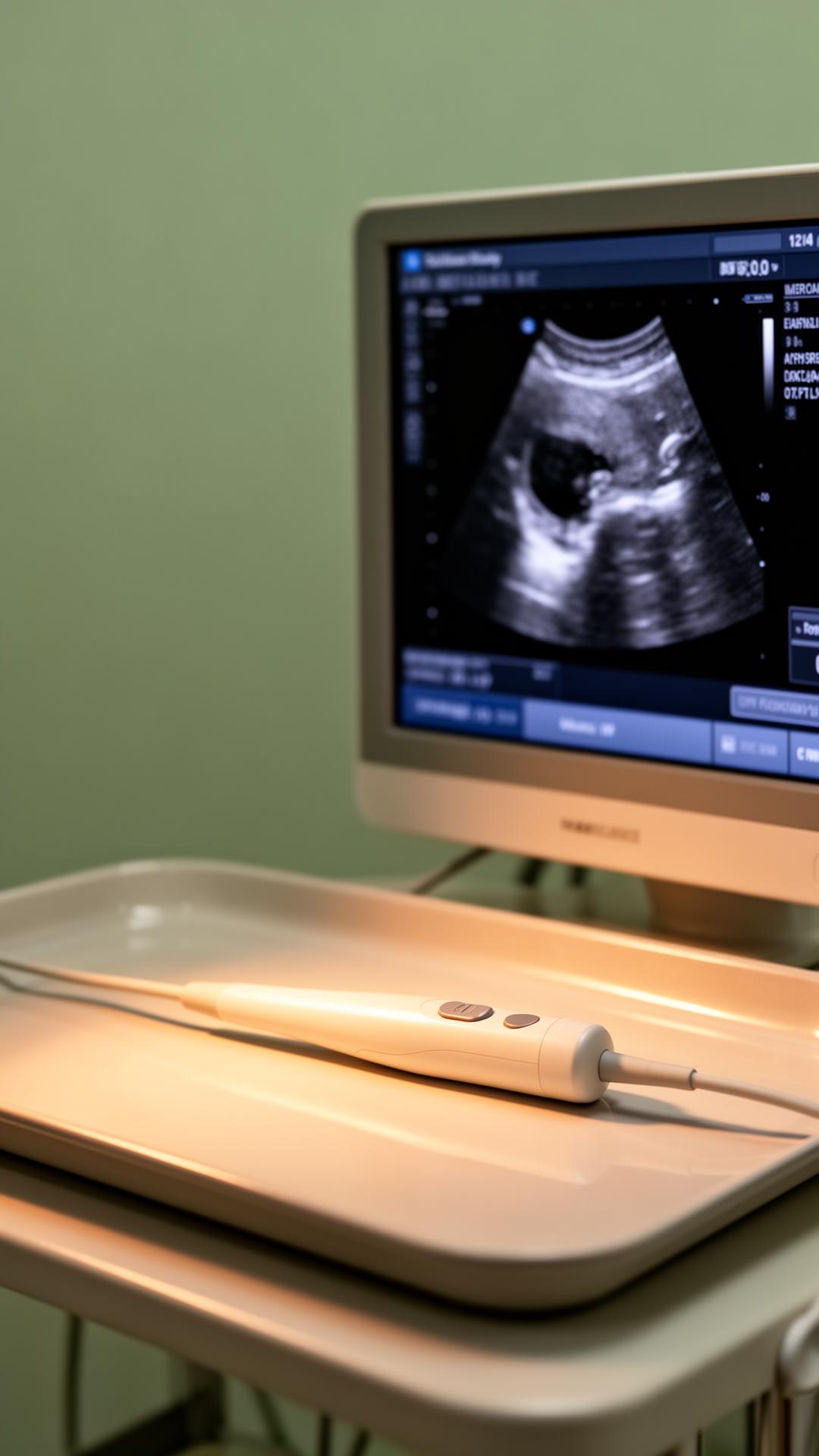
The primary diagnostic tool for endometrial thickness is a transvaginal ultrasound scan. This non-invasive procedure allows me to visualise the uterine lining and measure its thickness and pattern. During an IVF cycle, I perform these scans regularly, especially in the follicular phase, to monitor the lining's growth in response to medication. If a thin lining is consistently observed, we might then proceed with further investigations:
- Hysteroscopy — This is a procedure where a thin, lighted telescope is inserted through the cervix into the uterus, allowing direct visualisation of the uterine cavity. It's excellent for identifying scar tissue (Asherman's Syndrome), polyps, fibroids, or signs of chronic endometritis.
- Endometrial Biopsy and Culture — A small sample of the endometrial tissue can be taken during a hysteroscopy or as a separate procedure. This biopsy can be sent for histological examination to look for chronic endometritis (via plasma cells) or to assess oestrogen receptor expression. A culture can identify specific bacterial infections.
- 3D Ultrasound/Saline Infusion Sonography (SIS) — These provide more detailed views of the uterine cavity, helping to detect structural abnormalities that might not be clear on a standard 2D ultrasound.
- Dopamine Receptor Agonist Testing (e.g., Cabergoline challenges) — In some specific cases, this may be considered to evaluate hormonal responses.
04Evidence-Based Strategies to Improve Endometrial Thickness
Once we have a better understanding of the potential cause, we can tailor a treatment plan. It's often a process of trial and error, as what works for one patient may not work for another. Here are some of the strategies we employ at Apollo Fertility, Hyderabad:
- Optimised Oestrogen Dosing — If insufficient oestrogen is the issue, we can increase the dose of oestrogen medication (oral, transdermal patches, or vaginal gels/tablets) or change the route of administration. Sometimes, a prolonged oestrogen priming phase might be beneficial, where oestrogen is given for a longer duration before adding progesterone.
- Sildenafil Citrate (Viagra) — Yes, the well-known medication for erectile dysfunction has been used off-label in fertility treatment. Sildenafil works by increasing blood flow, and when administered vaginally (typically 25-100 mg, 3-4 times a day) or orally, it can potentially enhance blood flow to the uterus, improving endometrial growth. The cost for a cycle would typically be in the range of INR 1,500-3,000.
- Low-Dose Aspirin — Similar to Sildenafil, low-dose aspirin (75-100 mg daily) is sometimes prescribed to improve uterine blood flow by reducing platelet aggregation. It's a relatively inexpensive option, costing around INR 50-100 per month.
- Pentoxifylline and Tocopherol (Vitamin E) — This combination is sometimes used, particularly in cases of Asherman's Syndrome or uterine scarring. Pentoxifylline is a vasodilator and anti-fibrotic agent, while Vitamin E is an antioxidant. They are believed to work synergistically to improve blood flow and reduce fibrosis. A month's course might cost INR 800-1,500.
- Granulocyte Colony-Stimulating Factor (G-CSF) Intrauterine Infusion — G-CSF is a cytokine that plays a role in cellular growth and repair. Infusing a small dose directly into the uterine cavity (intrauterine) has shown promise in some studies for improving endometrial thickness and receptivity in women with recurrent thin lining, though more research is ongoing. Each infusion can cost INR 5,000-15,000, and several might be needed.
- Platelet-Rich Plasma (PRP) Intrauterine Infusion — PRP is derived from your own blood and contains a high concentration of growth factors that can promote tissue regeneration and angiogenesis (new blood vessel formation). Like G-CSF, PRP is infused directly into the uterus. While promising and widely discussed, it's still considered an experimental treatment, and its efficacy is subject to ongoing research. A single PRP infusion might cost INR 10,000-25,000.
- Hysteroscopy with Adhesiolysis — If Asherman's Syndrome or significant scar tissue is diagnosed, surgical removal of these adhesions via hysteroscopy (adhesiolysis) is often the first line of treatment. This procedure, performed by a skilled surgeon, aims to restore the normal uterine cavity and allow the endometrium to regrow. The cost for hysteroscopy can range from INR 25,000 to 70,000, depending on the complexity.
- Treatment of Chronic Endometritis — If a biopsy confirms chronic endometritis, a course of specific antibiotics (e.g., doxycycline) for 10-14 days is typically prescribed. Following treatment, a repeat biopsy may be done to ensure the infection has cleared.
- Switching to a Frozen Embryo Transfer (FET) Cycle — If the lining remains stubbornly thin despite our best efforts in a fresh IVF cycle, we will invariably recommend freezing all embryos. This allows us to defer the transfer and focus solely on optimising the endometrial lining in a subsequent, dedicated frozen embryo transfer cycle, without the confounding factors of ovarian stimulation hormones. This approach often yields better results for patients with thin lining concerns.
05Nutritional and Lifestyle Considerations
While medical interventions are key, I also advise my patients on lifestyle adjustments that might complement their treatment. While not direct 'cures', these can support overall reproductive health:
- Balanced Diet — A diet rich in antioxidants, whole grains, fruits, and vegetables can support overall health and potentially improve blood flow. Avoiding highly processed foods and excessive sugar is generally beneficial.
- Adequate Hydration — Ensuring you are well-hydrated is always important for cellular function and circulation.
- Moderate Exercise — Regular, moderate exercise can improve blood circulation throughout the body, including to the uterus. However, I caution against excessive, high-intensity exercise, which can sometimes negatively impact hormones.
- Stress Management — High stress levels can impact hormonal balance. Practices like yoga, meditation, or spending time in nature (perhaps at KBR Park here in Hyderabad) can be helpful.
- Avoid Smoking and Excessive Alcohol — These habits are detrimental to reproductive health in numerous ways, including potentially impairing uterine blood flow and endometrial receptivity.
06Realistic Expectations and the ART Act 2021
It's important to have realistic expectations. While many strategies can improve endometrial thickness, some cases remain challenging. Not every lining below 7 mm will fail, and not every perfect lining will succeed. The quality of the embryo also plays a significant role. Our goal is always to create the best possible environment, but there are always biological variables.
From a regulatory perspective, it's worth noting the Assisted Reproductive Technology (Regulation) Act, 2021, and its implications. While the Act primarily focuses on clinic regulation and ethical practices, it underscores the importance of thorough diagnostics and evidence-based treatments. For patients considering advanced therapies like PRP or G-CSF, it's crucial to discuss their experimental nature and the lack of robust, large-scale studies with your consultant, ensuring informed consent is obtained, as per the spirit of the Act.
The journey through IVF can be complex, and a thin endometrial lining is undoubtedly a hurdle. However, it's a hurdle we can often navigate with careful diagnosis, personalised treatment plans, and a proactive approach. I understand the emotional toll, and my team and I are here to support you every step of the way, exploring every viable option to give your embryos the best possible chance.
Want a personalised plan based on your reports?
Consult Dr. Sana by video from home — anywhere in India or abroad. Share your reports in advance and receive a written plan. No referral required.
Sources
- Indian Council of Medical Research — National ART Guidelines and the ART (Regulation) Act, 2021
- ESHRE — European Society of Human Reproduction and Embryology, clinical practice guidelines
- NICE CG156 — Fertility problems: assessment and treatment
- Royal College of Obstetricians and Gynaecologists — patient information and guidelines