In Vitro Fertilization (IVF)
Tailored IVF protocols using ICSI, MACS-prepared sperm and time-lapse embryology — with a documented 25% uplift in implantation rates.
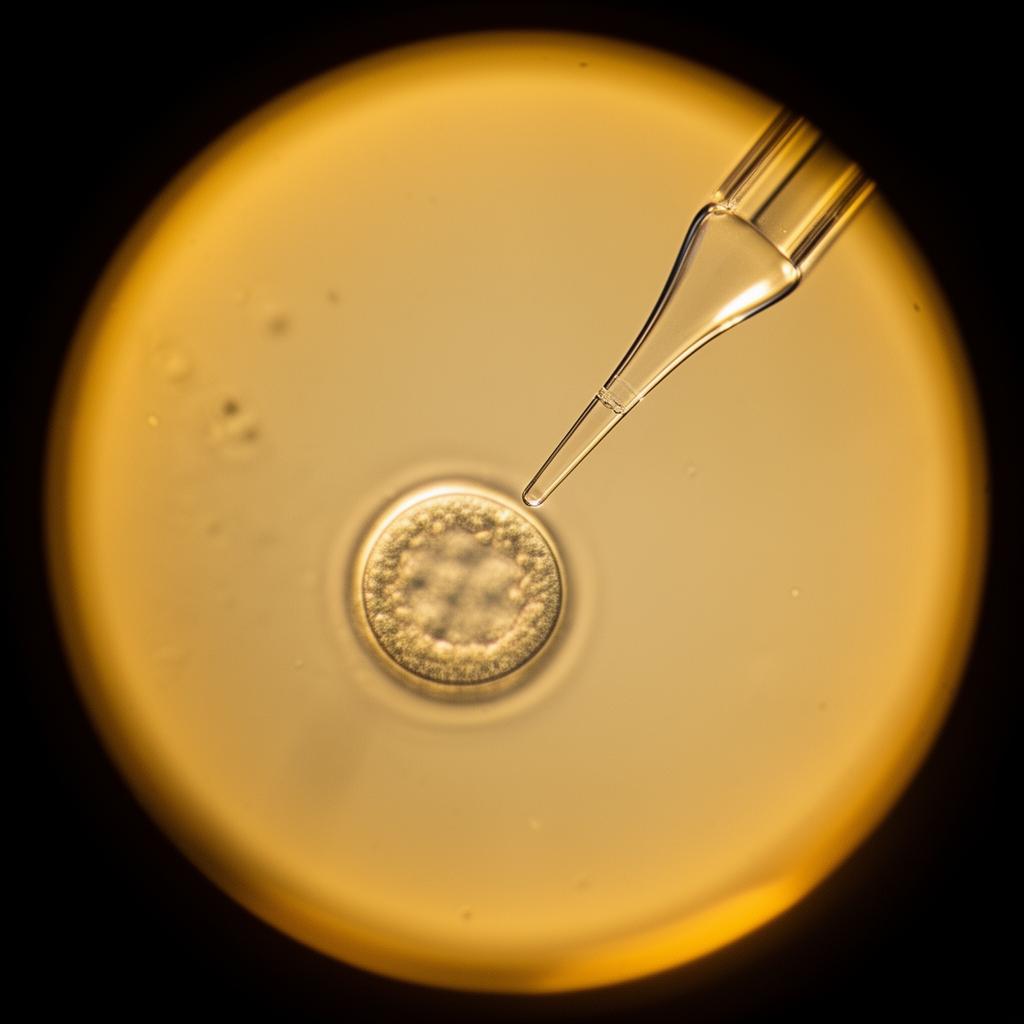
There is no single 'IVF protocol'. Two patients with the same age and AMH may need very different stimulation strategies, trigger timings and embryo-selection approaches. What we offer at Apollo Kondapur is genuinely personalised IVF — from the antagonist vs agonist decision, to whether ICSI is needed, to whether your embryos benefit from PGT-A.
- Tubal blockage or pelvic adhesions
- Severe male factor (low count, motility or DFI)
- Endometriosis stage III–IV
- Diminished ovarian reserve or advanced maternal age
- Recurrent IUI failure or unexplained infertility
- Couples needing PGT-A or PGT-M for genetic conditions
- Personalised stimulation protocol (antagonist, agonist, mini-IVF, duo-stim)
- 5–6 monitoring scans with hormonal tracking
- Egg retrieval under sedation (20 minutes)
- ICSI with MACS-prepared sperm where indicated
- Time-lapse embryo culture (EmbryoScope)
- Day-3 or Day-5 (blastocyst) embryo transfer
- Frozen-embryo transfer cycles for surplus blastocysts
How a in vitro fertilization (ivf) pathway unfolds.
What drives our 25% implantation uplift
Three things, mostly. First, MACS sperm preparation — magnetic separation removes apoptotic sperm before ICSI, particularly valuable in high-DFI couples. Second, time-lapse embryology lets us select embryos based on division kinetics, not just morphology — we can see the cleavage timing, multinucleation events and blastulation patterns that strongly correlate with implantation. Third, single-blastocyst transfer with personalised endometrial timing — using ERA testing where indicated — gets the embryo to a receptive uterus.
None of this is magic. It's the slow accumulation of small, evidence-based improvements at every step — stimulation protocol, lab conditions, embryo selection, transfer technique and luteal support.
Choosing your stimulation protocol
Antagonist protocols are our default for most patients — flexible, short, with lower OHSS risk. Long agonist protocols still have a role in endometriosis and selected normal responders. For poor responders we consider mini-IVF, duo-stim (two retrievals in one menstrual cycle), or DHEA/CoQ10 priming. For high responders, we plan freeze-all cycles to avoid OHSS and improve endometrial receptivity.
The protocol is decided in the first consultation, not on day 2 of the cycle. That preparation time matters — both for medication ordering and for any preconception correction (thyroid, vitamin D, glycaemic control) we want to complete before stimulation begins.
The shortest appropriate route is usually the best route.
Investigation narrows the choices. Treatment should become more specific as the evidence becomes clearer—not automatically more complex.
- 1
Assess
History, scans and both partners' tests
- 2
Understand
Find the factor that changes the plan
- 3
Choose
Natural, IUI, IVF or ICSI
- 4
Review
Learn from every response
ICSI, IMSI, MACS and PICSI — when to use what
ICSI is now used in roughly 70% of IVF cycles globally, indicated for any meaningful male factor, prior fertilisation failure, frozen-thawed eggs and PGT cycles. IMSI uses high-magnification sperm selection for severely abnormal morphology. PICSI selects sperm based on hyaluronic acid binding — a marker of maturity. MACS removes apoptotic sperm before injection, particularly useful in high-DFI couples and recurrent implantation failure.
We don't add these to every cycle — they're indication-driven, and we explain why we are or aren't recommending each one in writing.
PGT-A and PGT-M
Pre-implantation Genetic Testing for Aneuploidy (PGT-A) screens biopsied trophectoderm cells for chromosomal abnormalities before transfer — most useful in advanced maternal age, recurrent miscarriage and recurrent implantation failure. PGT-M tests for specific monogenic conditions (thalassaemia, SMA, BRCA, Huntington's) when one or both parents are carriers, allowing transfer of unaffected embryos.
Both add cost and require a freeze-all cycle, so we recommend them only when the clinical indication justifies the investment. For a 30-year-old first-cycle patient with no risk factors, PGT-A is rarely cost-effective.
Cost transparency
A standard IVF-ICSI cycle at Apollo Fertility Kondapur is ₹1.4–₹2.4 lakh, including stimulation, retrieval, ICSI, blastocyst culture and one fresh transfer. Add-ons (PGT-A, MACS, ERA, frozen transfer, ICSI) are quoted separately and only suggested when indicated. We do not bundle unnecessary services into a 'package' — every line item is explained, and you receive a written estimate before commencing.
IRDAI now mandates fertility cover in many corporate health policies. We help check your coverage and process cashless or reimbursement claims wherever possible.
What to expect physically and emotionally
Most patients work normally through stimulation. The injections are subcutaneous, well-tolerated and self-administered after a single demonstration. The retrieval is a 20-minute day-procedure under sedation; you go home the same afternoon and return to work within 48 hours. Transfer is a 5-minute outpatient procedure with no sedation. The two-week wait is the hardest part — we provide structured psychological support and clear instructions to bridge it.
Patients usually ask…
About 55% conceive in cycle 1, another 20% in cycle 2. Beyond cycle 3, we revisit the workup before continuing — repeating the same protocol indefinitely is rarely the right answer.
Injections are subcutaneous and well-tolerated. Retrieval is under sedation and painless. Most patients return to work in 2 days. Bloating in the days after retrieval is the most common complaint.
IRDAI now mandates fertility cover in many policies — we'll check yours and assist with cashless processing where possible.
Per-cycle live birth rates depend heavily on age and indication — roughly 45–55% under 35, 35–40% at 35–37, 25–30% at 38–40, and 10–15% over 40. We share our actual lab data, not industry averages.
Talk to Dr. Sana about in vitro fertilization (ivf).
Book a video consultation through Superprofile from India or abroad, subject to local rules. In-person care is available at Apollo Fertility, Kondapur, Hyderabad. No referral is needed.
Book a video consultation →Booking from abroad and having trouble paying online? Contact us for alternative payment options.
WhatsApp about payment