ICSI & Advanced Sperm Selection
Intracytoplasmic sperm injection with IMSI and PICSI selection where indicated — used when sperm count, motility, morphology or DNA quality makes conventional IVF fertilisation unreliable.
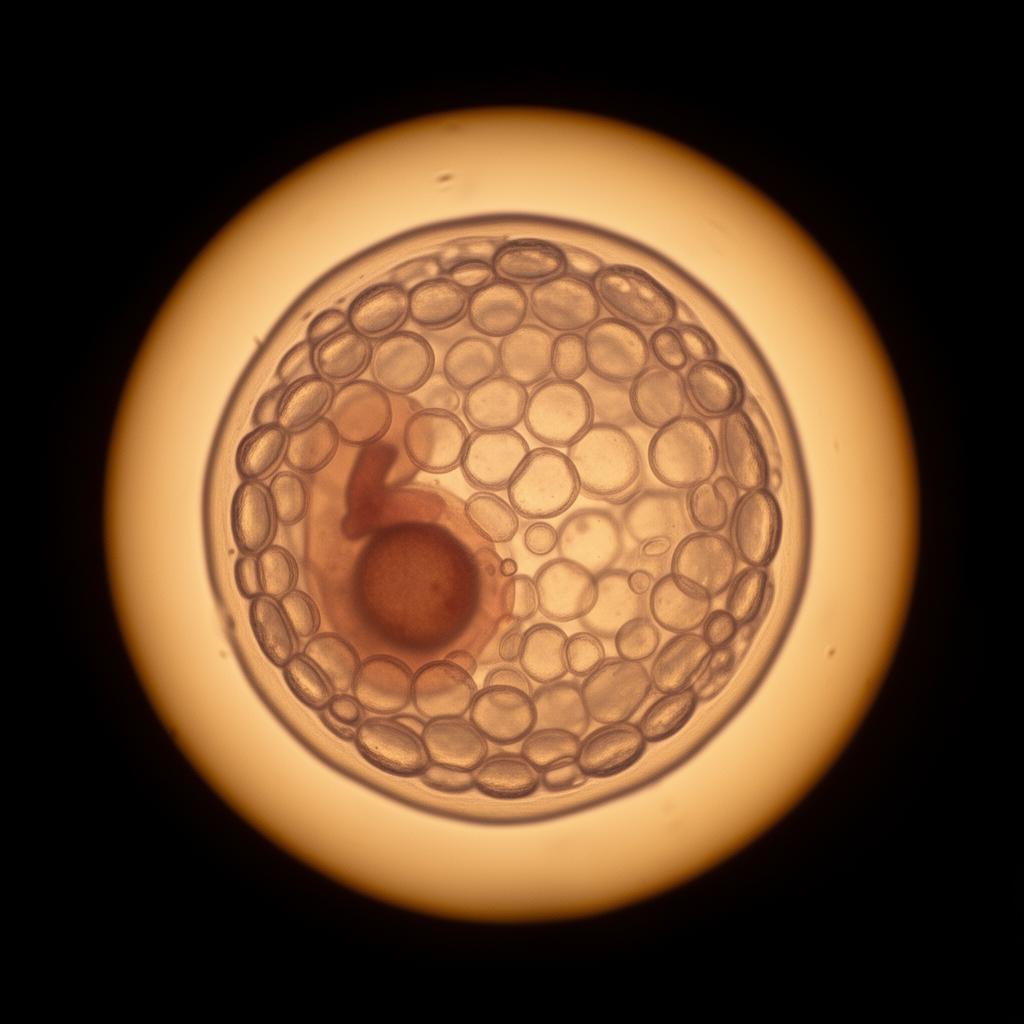
In conventional IVF, eggs and sperm are placed together in a dish and fertilisation is left to happen on its own. ICSI removes that uncertainty: a single sperm is selected under high magnification and injected directly into the egg. It is the standard approach for male-factor infertility, for previously failed fertilisation, and whenever eggs are few enough that losing them to a fertilisation failure would end the cycle.
- Low sperm count, poor motility or strict-criteria morphology below normal
- Surgically retrieved sperm (TESA, PESA, micro-TESE)
- Complete or near-complete fertilisation failure in a previous IVF cycle
- Frozen-thawed eggs, or a small number of mature eggs where every egg counts
- High DNA fragmentation index, where sperm selection technique matters
- Embryologist-led semen preparation and assessment on the day of retrieval
- ICSI on every mature (MII) egg retrieved
- IMSI — motile sperm organelle morphology examination at high magnification, where indicated
- PICSI / hyaluronan binding selection for high DNA fragmentation
- Day-1 fertilisation check and day-by-day embryo development report
- Blastocyst culture to day 5 or 6 wherever embryo numbers allow
How a icsi & advanced sperm selection pathway unfolds.
ICSI is not automatically better than IVF
There is a widespread assumption in India that ICSI is the 'upgraded' version of IVF and should be chosen by anyone who can afford it. The evidence does not support that. In couples with normal sperm parameters, ICSI does not improve live birth rates over conventional insemination — it simply adds cost and an unnecessary micromanipulation step. Professional bodies including ESHRE and ASRM recommend ICSI for male-factor infertility and prior fertilisation failure, not as a blanket default.
Where ICSI genuinely changes outcomes is at the margins: severely reduced counts, surgically retrieved sperm, thawed eggs whose outer shell has hardened, and cycles where only two or three mature eggs are available. In those situations the risk of a total fertilisation failure is real, and ICSI is the correct decision. Dr. Sana documents the indication for ICSI in writing before the cycle, so the reason is on record rather than assumed.
IMSI and PICSI — what the add-ons actually do
IMSI examines sperm at magnifications several times higher than standard ICSI optics, allowing the embryologist to avoid sperm with vacuoles in the head. PICSI selects sperm by their ability to bind hyaluronan, which correlates with maturity and lower DNA damage. Both are selection refinements, not different treatments — they change which sperm is used, not what happens after.
Evidence for both is mixed, and neither is recommended for every couple. They are worth discussing when the DNA fragmentation index is high, when there have been repeated poor-quality embryos with no female-factor explanation, or after recurrent early pregnancy loss. Where the data is uncertain, that uncertainty is stated plainly in the consultation rather than sold as an upgrade.
The shortest appropriate route is usually the best route.
Investigation narrows the choices. Treatment should become more specific as the evidence becomes clearer—not automatically more complex.
- 1
Assess
History, scans and both partners' tests
- 2
Understand
Find the factor that changes the plan
- 3
Choose
Natural, IUI, IVF or ICSI
- 4
Review
Learn from every response
What fertilisation results actually mean
A normal fertilisation rate after ICSI is roughly 70–80% of mature eggs, though this varies with egg quality and maternal age. Not every fertilised egg becomes a blastocyst — attrition through days 3 to 5 is biology, not laboratory failure. Ten eggs commonly become seven or eight mature, five or six fertilised, and two or three usable blastocysts.
Understanding this cascade in advance prevents the most distressing moment of an IVF cycle: being told on day 5 that the numbers have fallen, without ever having been told they were expected to. Every patient receives the expected attrition for their own age and reserve before stimulation begins.
Patients usually ask…
Large registry studies show a small absolute increase in certain congenital anomalies in ICSI-conceived children, but most of this appears related to the underlying infertility rather than the technique itself. The absolute risk remains low, and it is discussed openly before consent.
Yes, provided sperm can be retrieved surgically. TESA, PESA or micro-TESE recovers sperm directly from the testis or epididymis, and those sperm can only be used with ICSI.
Not if sperm parameters are normal. The evidence shows no live-birth benefit in that group, and the additional cost is significant. The indication is reviewed on the day of retrieval, when the actual sample is in front of the embryologist.
Talk to Dr. Sana about icsi & advanced sperm selection.
Book a video consultation through Superprofile from India or abroad, subject to local rules. In-person care is available at Apollo Fertility, Kondapur, Hyderabad. No referral is needed.
Book a video consultation →Booking from abroad and having trouble paying online? Contact us for alternative payment options.
WhatsApp about payment