Receiving a diagnosis of azoospermia — the complete absence of sperm in the ejaculate — can be profoundly distressing. For many men and their partners, it feels like an insurmountable barrier to having biological children. However, as a fertility specialist, I want to assure you that this diagnosis is not the end of your journey; rather, it marks the beginning of a crucial diagnostic pathway that often leads to successful outcomes.
01Understanding Azoospermia: More Than Just 'No Sperm'
Azoospermia affects about 1% of the general male population and 10-15% of men presenting with infertility. It's a diagnosis that requires careful consideration because its causes are varied, and understanding the root cause is paramount to formulating an effective treatment plan. It's crucial to understand that 'no sperm in the ejaculate' doesn't necessarily mean 'no sperm in the testes'.
There are broadly two main types of azoospermia: Obstructive Azoospermia (OA) and Non-Obstructive Azoospermia (NOA). Distinguishing between these two is the very first step in our diagnostic workup, as their management pathways are entirely different. This initial classification guides our subsequent investigations and, in the end, the most appropriate fertility treatment strategies for my patients here in Hyderabad and beyond.
02The Initial Workup: What to Expect at Apollo Fertility
When a patient comes to me with a diagnosis of azoospermia, my first priority is to confirm the diagnosis and then begin a systematic, evidence-based evaluation. This is not a one-size-fits-all process; it is tailored to each individual's history and clinical presentation.
The initial workup typically involves:
- Repeat semen analysis — A single semen analysis showing no sperm can sometimes be misleading. We always recommend at least two, preferably three, semen analyses performed at a reputable laboratory, with the sample collected after 2-7 days of abstinence. The sample is meticulously centrifuged and examined under a microscope for even a single motile sperm.
- Detailed medical history — This includes childhood illnesses (e.g., undescended testes, mumps orchitis), surgeries (e.g., hernia repair, vasectomy), infections (e.g., STIs), occupational exposures, medications, and lifestyle factors (e.g., smoking, drug use).
- Comprehensive physical examination — This focuses on secondary sexual characteristics, testicular size and consistency, and the presence of the vas deferens. Testicular volume is a key indicator; smaller, softer testes often suggest a problem with sperm production.
03Hormonal Assessment: Unveiling Endocrine Clues
Hormone levels provide critical insights into the function of the hypothalamic-pituitary-gonadal axis, which regulates sperm production. Blood tests are routinely ordered and typically include:
- Follicle-Stimulating Hormone (FSH) — Elevated FSH levels often indicate primary testicular failure (i.e., the testes are not producing sperm effectively), a hallmark of NOA. Normal FSH levels, in conjunction with azoospermia, are more suggestive of OA.
- Luteinising Hormone (LH) — Like FSH, LH levels can provide clues about testicular function.
- Testosterone — Levels indicate the Leydig cells' ability to produce male hormones. Low testosterone can sometimes be associated with hypogonadism, which may contribute to or cause azoospermia.
- Prolactin — Elevated prolactin can sometimes suppress gonadotropin release and sperm production.
- Inhibin B — Produced by Sertoli cells in the testes, Inhibin B is a good indicator of Sertoli cell function and spermatogenesis. Low levels can suggest impaired sperm production, particularly in NOA.
Interpreting these hormonal profiles helps us differentiate between obstructive and non-obstructive causes, thereby directing further investigations.
04Genetic Testing: Looking Beyond the Surface
Genetic factors play a significant role in a substantial proportion of azoospermia cases. Approximately 10-15% of men with NOA and 5-10% of men with OA have identifiable genetic abnormalities. Genetic testing is a crucial component of the workup, especially in NOA, and includes:
- Karyotyping — This test checks for chromosomal abnormalities, such as Klinefelter Syndrome (47, XXY), which is a common cause of NOA and leads to very small, firm testes. Other translocations or inversions can also impact fertility.
- Y-chromosome microdeletion analysis — Specific deletions on the long arm of the Y chromosome (AZF regions a, b, or c) are directly linked to impaired sperm production. Deletions in AZFa and AZFb regions typically result in irreversible NOA with no sperm present in the testes, making sperm retrieval highly unlikely. AZFc deletions, however, may still allow for sperm retrieval in some cases.
- Cystic Fibrosis Transmembrane Conductance Regulator (CFTR) gene mutation screening: This is particularly relevant for men with OA, as mutations in the CFTR gene can cause congenital bilateral absence of the vas deferens (CBAVD), where the tubes that transport sperm are missing. If a male partner has a CFTR mutation, we also recommend screening the female partner before proceeding with any assisted reproductive technologies (ART) to assess the risk of passing on cystic fibrosis to offspring.
Genetic counselling is an integral part of this process, providing my patients with a clear understanding of the implications of these findings for their health and their potential offspring.
05Imaging Studies: Visualising the Reproductive Tract
Imaging techniques help us visualise the male reproductive organs and identify any anatomical blockages or abnormalities. The primary imaging modality used is:
- Scrotal ultrasound — This non-invasive test evaluates testicular size, looks for varicoceles (enlarged veins in the scrotum that can impair sperm production), and assesses the epididymis and vas deferens for any signs of obstruction, such as epididymal cysts or absence of the vas. It can also help confirm the presence of testes in cases of cryptorchidism.
- Transrectal ultrasound (TRUS) — In cases where an obstruction of the ejaculatory ducts is suspected, TRUS can provide detailed images of the seminal vesicles and ejaculatory ducts, identifying blockages, cysts, or stones. This is more commonly performed when there's a suspicion of OA not identified by scrotal ultrasound.
These imaging studies provide crucial anatomical information, helping to distinguish between obstructive and non-obstructive causes.
06Testicular Biopsy and Sperm Retrieval: The Definitive Step
Once the initial workup is complete, and if we still haven't found sperm in the ejaculate, the next logical step often involves a procedure to directly look for sperm within the testes. This is a surgical procedure typically performed under local or general anaesthesia.
For Obstructive Azoospermia (OA):
- Percutaneous Epididymal Sperm Aspiration (PESA) or Micro-Epididymal Sperm Aspiration (MESA): These procedures involve aspirating sperm directly from the epididymis, the coiled tube behind the testes where sperm mature and are stored. PESA is simpler, while MESA involves a microsurgical approach to identify and aspirate larger quantities of high-quality sperm. The success rates for sperm retrieval in OA are generally very high, often exceeding 90-95%. The collected sperm can then be used immediately for intracytoplasmic sperm injection (ICSI) as part of an IVF cycle, or cryopreserved for future use. The cost for these procedures in Hyderabad can range from INR 40,000 to INR 80,000, depending on the complexity and facility.
For Non-Obstructive Azoospermia (NOA):
- Testicular Sperm Extraction (TESE) or Micro-TESE — In NOA, sperm production is impaired. TESE involves taking small biopsies from various parts of the testicle to search for pockets of sperm production. Micro-TESE, performed under an operating microscope, allows the surgeon to identify and selectively extract seminiferous tubules that are more likely to contain sperm, improving retrieval rates while minimising testicular damage. While success rates for sperm retrieval in NOA are lower than in OA (typically 30-60%), many men with NOA can still have their own biological children using sperm retrieved via Micro-TESE combined with ICSI. The cost for TESE/Micro-TESE can range from INR 70,000 to INR 1,50,000, reflecting the microsurgical expertise required.
In cases where a diagnostic testicular biopsy is performed without an immediate plan for ART, the tissue can be examined by a pathologist to understand the underlying cause of NOA (e.g., Sertoli cell-only syndrome, maturation arrest, hypospermatogenesis). This histological assessment provides crucial prognostic information.
07Moving Forward: Treatment Options and Hope
Once the type of azoospermia is identified, we can discuss the most appropriate treatment pathway. For obstructive azoospermia, surgical reconstruction (e.g., vasovasostomy or vasoepididymostomy) might be an option in some cases, though sperm retrieval followed by ICSI is often preferred due to higher success rates and less invasive nature.
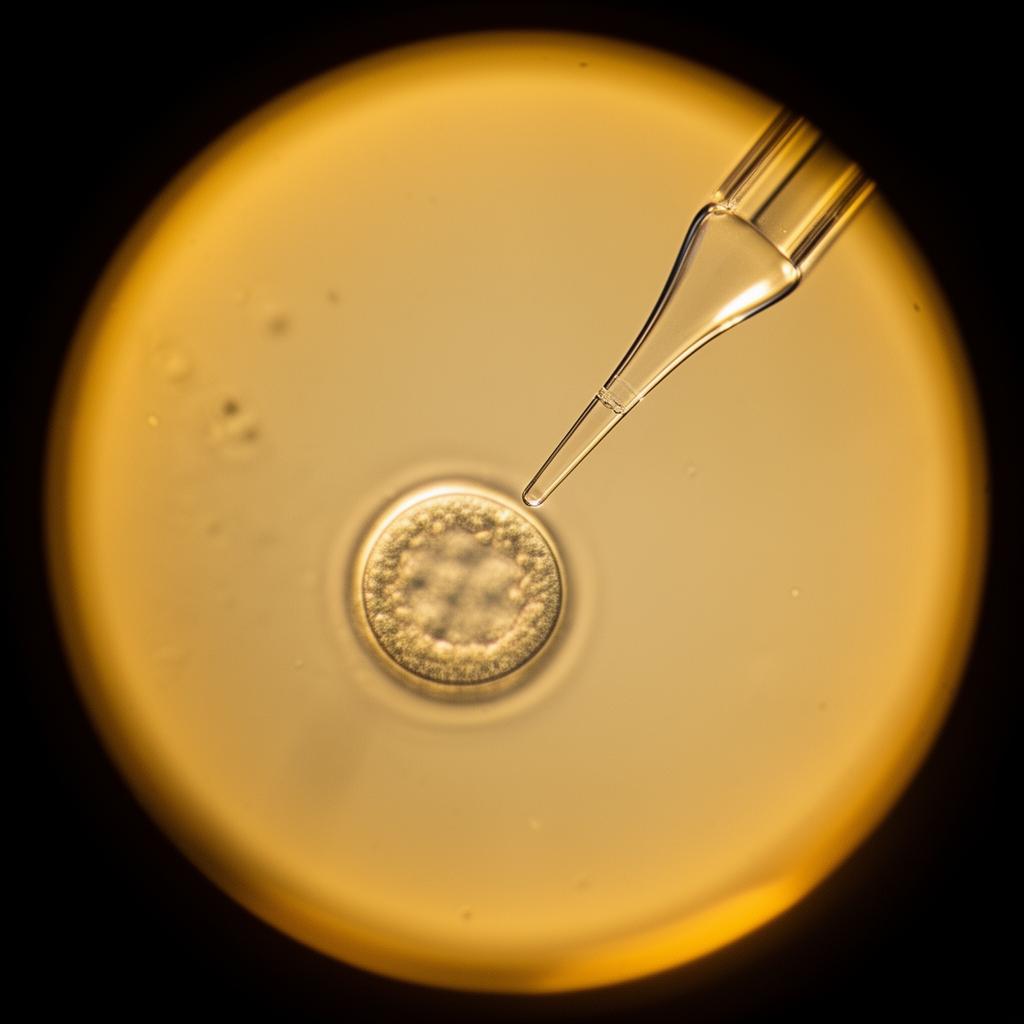
For non-obstructive azoospermia, if sperm is successfully retrieved through TESE or Micro-TESE, the next step is typically In Vitro Fertilisation (IVF) with Intracytoplasmic Sperm Injection (ICSI). This advanced technique involves injecting a single retrieved sperm directly into an egg. If sperm retrieval is unsuccessful or not feasible, my patients have several other family-building options:
- Donor sperm — Utilising sperm from a donor is a well-established and successful option, allowing couples to experience pregnancy and childbirth.
- Adoption — A beautiful path to parenthood for many couples.
- Child-free living — A valid and fulfilling choice for some.
Navigating an azoospermia diagnosis can be overwhelming, but please remember that advancements in reproductive medicine have opened many doors that were previously closed. My role is to guide you through each step of this diagnostic and treatment journey, offering clear, evidence-based advice and compassionate care.
Want a personalised plan based on your reports?
Consult Dr. Sana by video from home — anywhere in India or abroad. Share your reports in advance and receive a written plan. No referral required.
Sources
- Indian Council of Medical Research — National ART Guidelines and the ART (Regulation) Act, 2021
- ESHRE — European Society of Human Reproduction and Embryology, clinical practice guidelines
- NICE CG156 — Fertility problems: assessment and treatment
- Royal College of Obstetricians and Gynaecologists — patient information and guidelines