As a fertility specialist, I often see women grappling with life's big decisions – career aspirations, finding the right partner, or managing health challenges – all while feeling the ticking clock of their biological prime. Egg freezing offers a remarkable option, allowing you to press pause on that clock, providing peace of mind and future reproductive flexibility. But what exactly does this process entail, day by day, from my clinic in Hyderabad?
01Initial Consultation and Assessment: The First Step
Before we begin any treatment, a thorough initial consultation is paramount. This is where you and I will have an in-depth conversation about your motivations for considering egg freezing – be it career goals, lack of a suitable partner, upcoming medical treatments like chemotherapy, or simply wanting to preserve options. It's a space for you to ask all your questions, and for me to understand your unique circumstances and health history.
Following our discussion, I will recommend a series of diagnostic tests. These are crucial for assessing your current ovarian reserve and overall reproductive health. Typically, these include:
- A transvaginal ultrasound scan — To visualise your ovaries, count antral follicles (small fluid-filled sacs containing immature eggs), and check for any abnormalities like fibroids or cysts.
- Blood tests — To measure key hormone levels such as FSH (Follicle-Stimulating Hormone), LH (Luteinising Hormone), Oestradiol, and crucially, AMH (Anti-Müllerian Hormone). AMH is a good indicator of your remaining egg supply.
- Other general health checks — Including thyroid function, prolactin levels, and screening for infectious diseases like HIV, Hepatitis B, and Hepatitis C, which are mandatory as per the ART Act 2021 in India.
Based on these results, I can give you a realistic picture of your fertility potential and an estimate of how many eggs we might expect to retrieve in a cycle. This assessment helps us tailor the stimulation protocol specifically for you.
02The Preparation Phase: Getting Ready
Once we have a clear understanding of your ovarian reserve and you've decided to proceed, we enter the preparation phase. This typically begins around Day 2 or Day 3 of your menstrual cycle, as this is when your body naturally starts recruiting follicles for that cycle.
Some women might undergo a short course of oral contraceptive pills or oestrogen priming before starting injections. This is sometimes done to synchronize the growth of follicles, suppress cyst formation, or time the cycle more conveniently. However, this isn't universally required and depends on individual circumstances.
I will provide you with detailed instructions on how to administer the injectable medications at home. These injections are usually given subcutaneously, just under the skin, and are quite straightforward once you're shown how. We'll ensure you're comfortable and confident with the technique before you leave the clinic.
03Ovarian Stimulation: The Daily Injections (Days 1-12 of Injections)
This is the core of the egg freezing process, where we aim to stimulate your ovaries to produce multiple mature eggs, rather than the single egg released in a natural cycle. The medication involves daily injections of Gonadotropins, which are synthetic versions of the hormones your body naturally produces to stimulate follicle growth.
The duration of stimulation typically ranges from 10 to 14 days, though it can vary based on your individual response. Throughout this period, you will have regular monitoring appointments at our clinic in Hyderabad. These appointments are crucial and usually occur every 2-3 days, sometimes more frequently towards the end of stimulation. Each monitoring visit involves:
- Blood tests — To check your oestrogen levels, which rise as follicles grow.
- Transvaginal ultrasound scans — To measure the size and count of developing follicles in both ovaries. We are looking for follicles that are reaching an optimal size, usually between 16-22 mm, indicating they contain mature eggs.
Based on these results, I will adjust your medication dosages as needed to ensure optimal follicle development while minimising the risk of side effects, such as Ovarian Hyperstimulation Syndrome (OHSS). My team will guide you through each step, ensuring you understand the rationale behind any adjustments.
04The Trigger Shot: Timing is Everything (Around Day 12-14 of Injections)
Once the follicles have reached the optimal size and your hormone levels are ideal, it's time for the 'trigger shot'. This is a single, precisely timed injection, typically of hCG (Human Chorionic Gonadotropin) or a GnRH agonist. The trigger shot initiates the final maturation process of the eggs within the follicles and prepares them for retrieval.
The timing of this injection is absolutely critical. Egg retrieval must be scheduled approximately 34-36 hours after the trigger shot. If retrieval happens too early, the eggs may not be mature enough; too late, and they may have ovulated naturally. I will give you very clear, precise instructions on when and how to administer this final, vital injection. This meticulous timing is what ensures we collect as many mature eggs as possible.
05Egg Retrieval: The Procedure Day (Approximately Day 14-16 of Cycle)
The egg retrieval procedure is a relatively short, minimally invasive outpatient procedure performed in our theatre, usually under mild sedation or general anaesthesia. This means you will be asleep and comfortable throughout.
Here's what happens:
- Preparation — You will arrive at the clinic after a period of fasting, typically 6-8 hours, as instructed.
- The Procedure — Guided by a transvaginal ultrasound, I will use a fine needle attached to a catheter to gently aspirate (suction out) the fluid from each mature follicle. This fluid, which contains the eggs, is immediately passed to our embryology lab.
- In the Lab — Our experienced embryologists will then identify and isolate the eggs from the follicular fluid under a microscope. They will assess the maturity of each egg.
The procedure itself usually takes about 20-30 minutes, depending on the number of follicles. You'll typically be observed for an hour or two in recovery before being discharged home. You will need someone to accompany you home as you will have received anaesthesia.
06Post-Retrieval and Freezing: Securing Your Future
After retrieval, you might experience some mild cramping, spotting, or bloating, which can be managed with over-the-counter pain relievers. I will provide you with specific post-procedure care instructions and let you know what to expect.
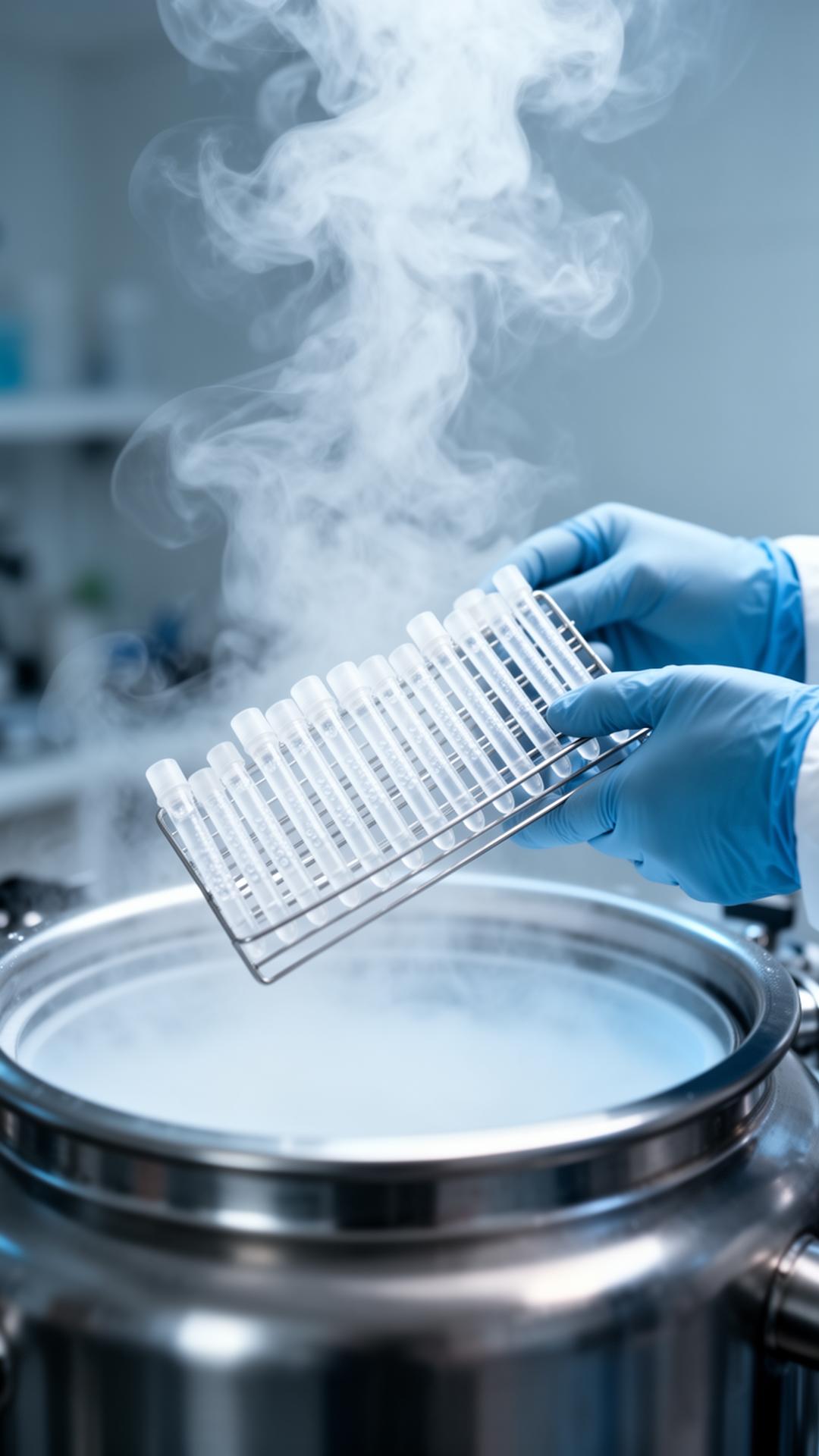
Meanwhile, in the embryology lab, the mature eggs are prepared for cryopreservation, or freezing. We use a sophisticated rapid freezing technique called vitrification. This method cools the eggs extremely quickly, preventing the formation of ice crystals that can damage the delicate cellular structures. The vitrified eggs are then stored in liquid nitrogen tanks at -196°C, where they can remain viable for many years.
Within a few hours of your retrieval, or the next day, my team will inform you about the number of eggs retrieved and, crucially, how many of them were mature enough to be frozen. The number of eggs frozen directly correlates with the chances of future pregnancy, with an ideal target often being 10-20 mature eggs, depending on your age.
07Cost and Considerations in India
Understanding the financial aspect is crucial. In Hyderabad, the cost of a single egg freezing cycle can range from approximately INR 1,20,000 to INR 2,00,000. This typically includes the initial consultation, diagnostic tests, medications, monitoring scans, the egg retrieval procedure, anaesthesia, and the initial storage fee for one year. Ongoing annual storage fees are separate, usually ranging from INR 10,000 to INR 20,000.
It's important to remember that these are approximate figures, and the exact cost can vary based on individual medication needs and clinic policies. Some women may require more medication due to a lower ovarian reserve, which can slightly increase the overall cost. My team will provide a transparent breakdown of all anticipated expenses during your initial consultation.
Egg freezing is an investment in your future. It provides the freedom to pursue your life goals without the intense pressure of your biological clock. While it’s not a guarantee of a baby, it significantly improves your chances compared to not freezing at all, especially if done at a younger age. We follow all guidelines stipulated by the ART Act 2021, ensuring ethical and regulated practice.
Want a personalised plan based on your reports?
Consult Dr. Sana by video from home — anywhere in India or abroad. Share your reports in advance and receive a written plan. No referral required.
Sources
- Indian Council of Medical Research — National ART Guidelines and the ART (Regulation) Act, 2021
- ESHRE — European Society of Human Reproduction and Embryology, clinical practice guidelines
- NICE CG156 — Fertility problems: assessment and treatment
- Royal College of Obstetricians and Gynaecologists — patient information and guidelines