Menopause can bring changes in sleep, symptoms, body composition and bone health. Food supports health through this transition, but no ingredient can reliably switch off hot flushes or replace treatment when it is needed. The aim is a sustainable eating pattern that supports strength, fits your household and leaves room for enjoyment.
1. Build meals around familiar foods
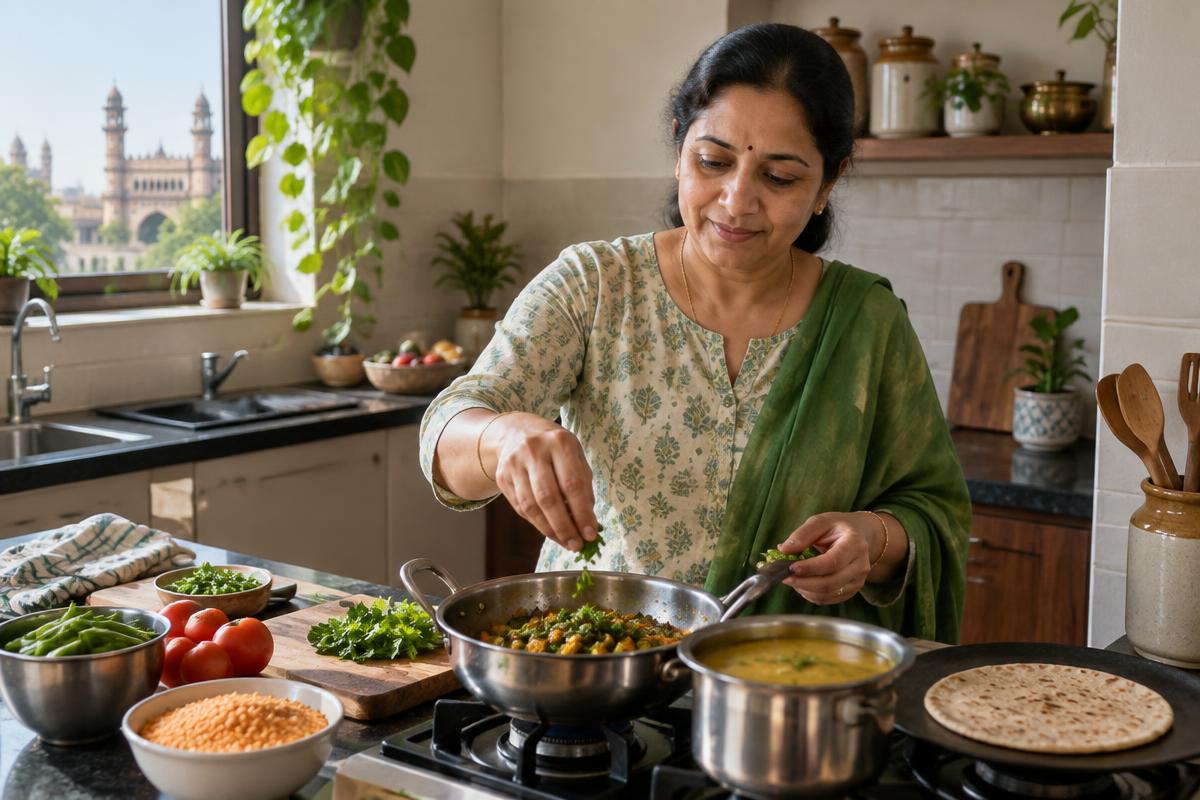
There is no need to abandon rice, rotis or family recipes. A useful starting point is to combine a grain or other starchy food with a clear protein source and vegetables. Adjust portions to appetite, activity, medical needs and budget rather than following a rigid “menopause plate”.
Lunch might be rice with a generous serving of dal, cooked vegetables and plain curd. Dinner could be rotis with chana and sabzi, or fish or chicken with vegetables and rice. Breakfast options include vegetable besan chilla with curd, or idli with a substantial bowl of sambar. Thin sambar provides less protein than a thicker, dal-rich serving.
Whole grains, pulses, vegetables and fruit provide fibre and variety. Increase fibre gradually if it causes bloating. Frozen vegetables and convenient cooked pulses can help on busy days; meals do not have to be elaborate to be useful.
2. Give protein a regular place
Protein helps maintain muscle, particularly alongside strength-building activity. Rather than leaving most protein for dinner, include a source across the day. Vegetarian options include dals, beans, chickpeas, soy foods, milk, curd and paneer. Eggs, fish and lean meat are options for people who eat them.
A spoonful of dal or a few nuts may not make a meal protein-rich. Consider the actual serving and the rest of the meal. Roasted chana, plain curd or an egg can make a practical snack when hungry. Nuts and seeds contribute nutrients but need not be treated as the main protein source.
Protein powders are not automatically necessary. Requirements vary with body size, activity and health. Anyone with kidney disease or another condition requiring dietary restrictions should seek individual advice before substantially increasing protein.
3. Support bones with calcium and sensible vitamin D advice
Falling oestrogen levels around menopause can accelerate bone loss. Calcium-containing foods support bone health, but they do not guarantee protection against osteoporosis. Milk, curd and paneer are familiar sources. Calcium-fortified plant drinks and calcium-set tofu can help, but check labels because products differ.
Ragi, sesame, pulses and some green vegetables contribute calcium, although amounts eaten and absorption vary. A sprinkle of sesame alone is not a complete calcium plan. If dairy causes digestive symptoms, discuss tolerated alternatives rather than removing a whole food group without replacing its nutrients.
Vitamin D helps the body absorb calcium. Living in sunny Hyderabad does not ensure adequate levels: time indoors, clothing, skin pigmentation and other factors affect vitamin D production. There is no single sunlight schedule suitable for everyone, and deliberate sunburn is unsafe.
A clinician can assess whether testing or supplementation is appropriate, particularly with osteoporosis, suspected deficiency or other risk factors. Avoid self-prescribed high-dose vitamin D. Calcium supplements also need a reasoned discussion about dietary intake, medicines and medical history.
4. Pair the plate with strength and movement
Resistance activity gives muscles a reason to stay strong. Options include resistance bands, weights, wall push-ups and controlled sit-to-stand movements. Begin at a manageable level and build gradually. A physiotherapist or qualified exercise professional can help with technique and adaptations.
Weight-bearing activity means moving while supporting your body weight, such as walking, dancing or climbing stairs. Balance practice is useful too. Walking benefits health, but does not replace all the muscle-strengthening work of resistance exercise. Existing fractures, osteoporosis, joint problems or dizziness call for tailored advice before unfamiliar or high-impact movements.
5. Weight is not a moral judgement
Midlife weight and waist changes can reflect ageing, hormonal changes, disrupted sleep, medicines, activity and other influences. They are not evidence of laziness or a lack of discipline. Restrictive diets may make adequate protein and calcium harder to obtain.
Focus on sustainable routines, strength and relevant health measures rather than judging success only by the scales. HRT is not a weight-loss treatment. Decisions about HRT should address menopausal symptoms, potential benefits, risks and personal medical history—not promises about body size.
- Include a meaningful protein source at meals.
- Plan regular calcium-containing foods; discuss vitamin D when appropriate.
- Combine weight-bearing movement with resistance activity.
- Seek symptom treatment when needed; food is support, not a cure.
6. When to seek care
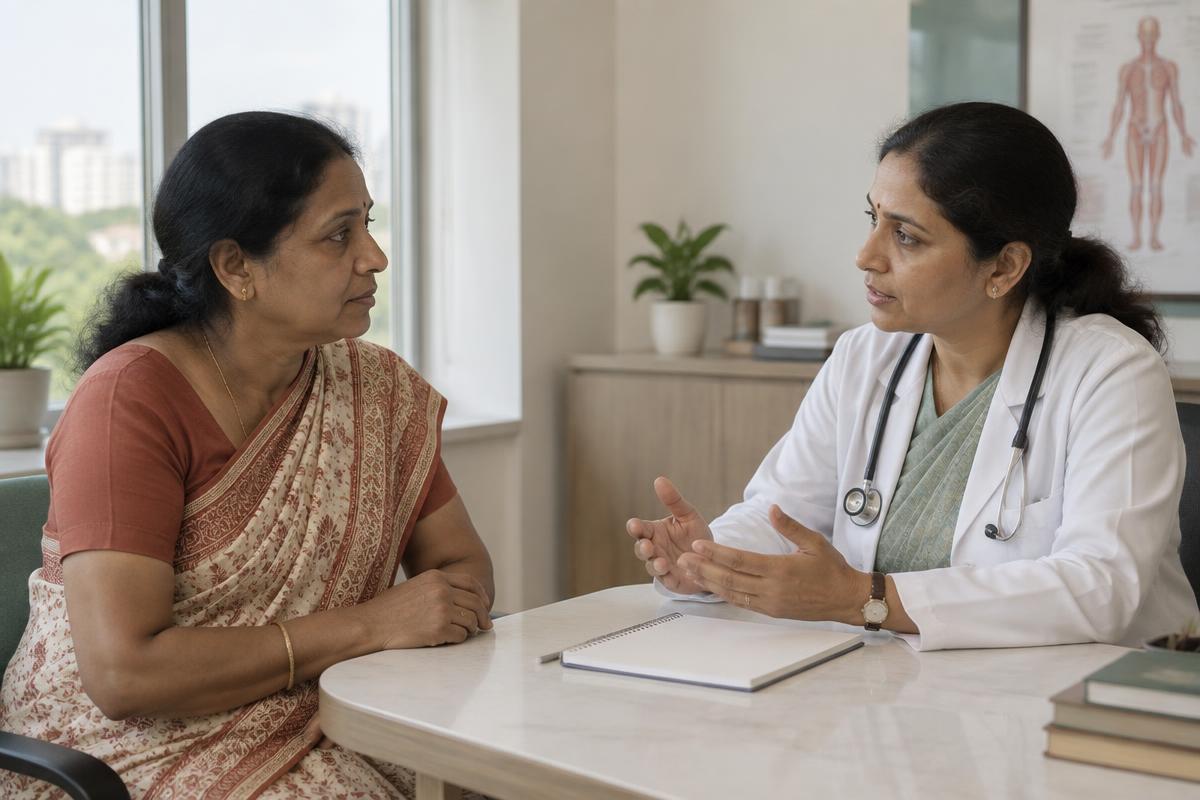
Arrange a consultation if symptoms disrupt sleep or daily life, periods stop before age 45, or eating becomes difficult. Unexplained weight loss, persistent fatigue, a fracture after a minor fall or new persistent back pain also deserve assessment. Bleeding after 12 months without periods needs prompt medical evaluation rather than being attributed to diet or menopause.
Sources consulted: NICE NG23, Menopause: identification and management — https://www.nice.org.uk/guidance/ng23 ; Indian Menopause Society clinical practice guidance — https://pmc.ncbi.nlm.nih.gov/articles/PMC7688016/
For a personalised menopause consultation with Dr. Munawwer Sana at Apollo Fertility, Kondapur, Hyderabad, or online, book an appointment.
Want a personalised plan based on your reports?
Book an online consultation with Dr. Sana, or see her at Apollo Fertility, Kondapur (Mon, Tue, Wed, Thu & Sat, 1:00 PM – 6:00 PM). No referral required.
References & clinical guidelines
- Indian Council of Medical Research — National ART Guidelines and the ART (Regulation) Act, 2021
- ESHRE — European Society of Human Reproduction and Embryology, clinical practice guidelines
- NICE CG156 — Fertility problems: assessment and treatment
- Royal College of Obstetricians and Gynaecologists — patient information and guidelines